RBI slaps notices on several banks, asking them to pay crores of rupees as fine for dishonour of instruments under ECS beyond the acceptable limits
The Reserve Bank of India has written letters to several banks because they have crossed the limit of instruments dishonoured under the Electronic Clearing Service (ECS); 3%-5% is the acceptable apex bank norm—in a few cases, the percentage of dishonoured instruments under ECS has been as high as 30% to 40%. However, this move is a warning, and may not lead to punitive action
The RBI (Reserve Bank of India) keeps a track on the percentage of dishonoured instruments cleared under the ECS of all banks.
The ECS allows paperless direct credit and debit transactions for all banks. However, if a bank crosses the limit of instruments dishonoured under the ECS, the RBI asks the respective bank for an explanation.
According to the apex bank, "3%-5% is the tolerance level on a daily basis. At times when it goes up to 30%-40%, we ask the bank to find out about the particular accountholders whose instruments are not being honoured under ECS." Often, banks are not aware about the accountholders who are repeatedly dishonouring their financial instruments as ECS is transmitted in bulk to the clearing house.
The main problem is that even if one of the ECS instruments bounces, then it affects two or three banks at a time. It affects the ECS user bank, the ECS beneficiary bank and the destination bank to which the amount has to finally get transferred.
In a letter addressed to ICICI Bank, a copy of which is with Moneylife, the RBI has said: "Please refer to paragraph 2 of the Minutes of the General Body Meeting of the Chennai Bankers Clearing House (CBCH) held on August 2, 2010 and our letter dated October 28, 2010 relating to return clearing discipline. In pursuance of the instructions contained therein, it has been decided to invoke penalty @Rs. 1000.00 per return for the month of January. The number of MICR and as well as RECS (Dr) returns of your banks has since been generated from the system and the details are been given in annexure. After deducting the tolerance of 4% and 5% on MICR and RECS returns respectively, a penalty of Rs 39821000.00 (Rupees Three Crore Ninety Eight Lakh twenty One Thousand only) is proposed to be imposed on your bank for non-adherence to the return discipline. You are hereby advised to put forward your case as to why Rs 39821000.00 (Rupees Three Crore Ninety Eight Lakh twenty One Thousand only) shall not be imposed on your bank. Your response should reach this office on or before 15 days from the issue of this letter, failing which it shall construed that you have nothing to report and accordingly the Bank shall proceed with a suitable action."
We gather that several other banks have been pulled up in a similar fashion. Thus, the RBI has defined a definite tolerance level beyond which it would charge a bank a certain fine on each rejection. That is why the RBI has threatened to charge a Rs3.98 crore fine for ECS dishonour beyond acceptable limits on ICICI Bank.
Moneylife spoke to the RBI for clarification. The central bank spokesperson said, "There were several banks that were not adhering to what we call 'return discipline' in Chennai and the notice was issued to all of them. The fine amount, though, varied. The purpose of the show-cause notice was to shake the banks out of complacence and to ensure that the rate of 'returns' fell within our comfort zone (and not really to collect fine amounts from them). There is significant improvement in the position now and we are not pursuing the penalties with the banks."
It was only after receiving the letter from the central bank that banks started screening accounts and transactions and are stopping all ECS debits.
ECS is a mode of electronic funds transfer from one bank account to another using the services of a clearing house. This is normally utilised for bulk transfers from one account to many accounts or vice-versa. This facility can be used both for making payments like distribution of dividend, interest, salary, pension, etc. by institutions or for collection of amounts for purposes such as payments to utility companies (telephone, electricity), or charges (house tax, water tax), etc or for loan instalments of financial institutions/banks or regular investments of individuals.
The ECS user bank is called the 'sponsor' bank under the scheme and the ECS beneficiary accountholder is called the ECS 'beneficiary' bank. The destination account holder's bank or the beneficiary's bank is called the 'destination' bank.
The beneficiaries of regular or repetitive payments can also request the paying institution to make use of the ECS (Credit) mechanism for effecting payment.
News Highlights - Week of 23 - 27 May 2011
Consumer price inflation accelerated in Hong Kong, China; Japan; and Viet Nam last week; while it eased in Singapore. In Hong Kong, China, inflation rose to 4.6% year-on-year (y-o-y) in April from 4.4% in March on the back of escalating food and housing rental prices. In Japan, headline inflation rose for the first time in 28 months in April-to 0.3% y-o-y-while inflation excluding fresh food climbed to 0.6%. Viet Nam's inflation rate surged to 19.8% y-o-y in May, compared with 17.5% in April, largely due to relatively high price spikes in food and housing costs. In contrast, Singapore's consumer price inflation rate eased to 4.5% y-o-y in April from 5.0% in March.
* The current account surplus of the People's Republic of China (PRC) narrowed by 18.0% y-o-y to USD29.8 billion in 1Q11, while it widened in the Republic of Korea to USD1.9 billion in April from USD1.3 billion in March.
* Hong Kong, China posted a merchandise trade deficit of HKD42.4 billion in April as merchandise export growth of 4.1% y-o-y was outpaced by merchandise import growth of 6.1%. Japan recorded a trade deficit of JPY463.7 billion in April due to a 12.5% y-o-y drop in exports and an 8.9% rise in imports. In the Philippines, merchandise import growth eased to 21.2% y-o-y in March from 21.9% in February, and the country recorded a trade deficit of USD3.4 billion in 1Q11.
* Thailand's real GDP grew 3.0% y-o-y in 1Q11, mainly on the back of strong growth in exports, private investment, and tourism, but manufacturing output fell 7.8% y-o-y in April. The Philippines real GDP growth eased to 4.9% y-o-y in 1Q11 from 7.1% in 4Q10. Viet Nam's industrial production expanded 14.2% y-o-y in May.
* The Philippines posted a fiscal surplus in April of PHP26.3 billion-the highest monthly surplus in the past 25 years-bringing the cumulative fiscal balance in January-April to a surplus of PHP61 million. Revenue collection rose 11.1% y-o-y in April to PHP138.3 billion, while government expenditures declined 8.0% to PHP112.1 billion. The Republic of Korea's fiscal deficit narrowed to KRW4.4 trillion in 1Q11. Meanwhile, Fitch Ratings revised Japan's outlook to negative from stable last week.
* The Republic of Korea's external debt rose 6.1% quarter-on-quarter (q-o-q) to USD381.9 billion at end-March-led by an 8.7% rise in short-term external debt. Meanwhile, household loans climbed 8.0% y-o-y to KRW752.3 trillion at end-March.
* The Korea Development Bank issued a THB3 billion 3-year bond at 3.88% last week. The state-owned Expressway Authority of Thailand issued a THB1 billion 10-year bond at 3.81%, and Thitikorn priced its THB500 million 5-year senior bond at 3.92% for the first 3 years with an increase to 5.00% in the remaining 2 years. In Viet Nam, Sacombank Securities Joint Stock issued a VND185 billion 1-year floating rate bond with a coupon to be reset quarterly.
* Government bond yields fell last week for most tenors in Hong Kong, China; the Republic of Korea; and the Philippines, while yields rose for most tenors in Indonesia, Malaysia, Thailand and Viet Nam. Yield movements were mixed in the PRC and Singapore. Yield spreads between 2- and 10- year tenors widened in Malaysia and Viet Nam, while spreads narrowed in most other emerging East Asian markets.
Utah has passed a law intended to encourage residents to use gold or silver coins made by the Mint as cash, but with their value based on the weight of the precious metals in them, not the face value - if, that is, they can find a merchant willing to accept the coins on that basis.
After all, while the one-ounce American Eagle coin produced by the Mint says “One Dollar,” it is actually worth more like $38 based on the current price of silver. (An ounce of gold is worth more than $1,500.)
The legislation, called the Legal Tender Act of 2011, was inspired in part by Tea Party supporters, some of whom believe that the dollar should be backed by gold or silver and that Obama administration policies could cause a currency collapse. The law is the first of its kind in the United States. Several other states, including Minnesota, Idaho and Georgia, have considered similar laws.
Mr. Jurkowsky said the new law “is of no real consequence,” and is purely symbolic, but supporters say it is more than political pocket change. They say that it is just a beginning, that one day soon Utah might mint its own coins, that retailers could have scales for weighing precious metals and that a state defense force could be formed to guard warehouses where the new money would be made and stored.
“This is an incremental step in the right direction,” said Lowell Nelson, the interim coordinator for the Campaign for Liberty in Utah, a libertarian group rooted in Ron Paul’s presidential campaign. “If the federal government isn’t going to do it, then we here in Utah ought to be able to establish a monetary system that would survive a crash if and when that happens.”
Utah has a strong conservative streak, but there are other reasons why it was first to pass such a law.
For many of its supporters, the new law represents an extension of the notion of preparedness that is nurtured by Utah’s powerful founding institution, the Church of Jesus Christ of Latter-day Saints. Many of the law’s supporters believe policies like stimulus spending, the bank bailout and national health care will soon bankrupt the government, sending inflation soaring. Owning gold and silver, they say, will help protect people.
“It’s kind of written into our theology that we’re supposed to be prepared for any eventuality,” said Mr. Nelson, who was involved in early meetings with state lawmakers about the law.
Wayne Scholle, the marketing director for Old Glory Mint, in Spanish Fork, Utah, showed off a commemorative silver coin the company made honoring the new law, one he said he hoped could be a model for a future state-minted coin. The front — or obverse — includes an image representing “the miracle of the gulls,” an important story in Mormon folklore in which seagulls are said to have suddenly appeared and eaten insects that were destroying the first crops Mormon settlers raised, a year after arriving in Utah in 1847.
“Their messaging is spot on with this,” Mr. Scholle said. “It’s preparedness. It’s protecting yourself.”
Old Glory is not the only company that hopes to benefit. Craig Franco, a coin dealer south of Salt Lake City, said he was finishing an arrangement with a bank to create a depository through which people will be able to spend their gold and silver indirectly, by using a Visa credit card that makes charges against the value of their holdings. Mr. Franco noted that state law, for now, left it to the private sector to figure out how conducting business with gold and silver should work.
“The regulation of the system?” Mr. Franco said. “There is no regulation of the system. We are working out the nuances of it.”
Mr. Franco is among several supporters who say the law’s most important feature may be that it eliminates state capital gains taxes on the sale of gold and silver, a move he thinks will prompt individuals and large scale investors outside the state to move their gold and silver to Utah. But federal capital gains taxes would still apply.
“I would hope the federal government would simply concede: ‘O.K., you’re right, it’s money, so we can’t tax it,’ ” said Larry Hilton, a lawyer and insurance broker who first took the idea to lawmakers. “But that may not happen.”
Article 1, Section 10 of the Constitution says no state shall coin money, though Mr. Hilton and some others argue that a phrase used later, saying no state shall “make anything but gold and silver coin a tender in payment of debts” can be read as a license for Utah’s new law and, perhaps, for a state’s right to mint its own coins.
A spokesman for the Mormon church would not comment on the Utah law, but said in a statement that the church’s teachings related to preparedness were “simply a matter of encouraging people to practice sound principles of provident living and to save for a rainy day.”
State Representative Brad Galvez, the freshman Republican who sponsored the bill at the request of party leadership, said he was “not trying to push back against the federal government” but simply to “create an alternative” to the dollar that lawmakers hoped might send a message to Washington about fiscal policy. He noted that the law does not require businesses to accept gold or silver, but only gives them a choice.
Much of the logic of the law is rooted in the belief that the dollar is at risk and that gold and silver, coined around the world for thousands of years, are enduring, stable investments. That, too, is in dispute.
“From an investment standpoint, I’ve always found that if something is heavily advertised on television, it’s not a good thing to do,” said Gary P. Brinson, a philanthropist who spent 40 years as an investment strategist. “Right now, it’s hard to find anywhere on television where you don’t see gold and silver being advertised.”
For all the excitement, so far, it is hard to find anyone who is using gold or silver to buy anything. But here in Farr West, about 40 miles north of Salt Lake City, there is at least some precedent for such transactions.
Decades ago, the rambling Smith and Edwards store, a kind of giant 7-Eleven from the Old West that sells everything from survival kits to sporting goods and copies of the Constitution, had a special sale, offering a very favorable rate if people made purchases with “junk silver” dollars and half dollars. In the 1980s, the store sold a man a $1,200 air compressor for a little less than 4 ounces of gold, recalled Bert Smith, one of the owners, who is now 91.
Mr. Smith said that he liked the new law, and that he was ready to accept silver and gold. But he does not expect to see much brought to his registers.
“I don’t suppose there’s going to be a big run on it,” Mr. Smith said, “because people are going to hang on to their gold and silver more than ever.”
This story originally appeared in The New York Times
Against a basket of five currencies, the trade weighted New Zealand dollar is near its highest level since April 2008, having notched solid gains against other major currencies, notably the Australian dollar.
The yuan traded at a record high against the dollar on Monday after the People's Bank of China set a new peak for the mid-point for the third straight session, suggesting another leg of appreciation is underway.
New Zealand Dollar
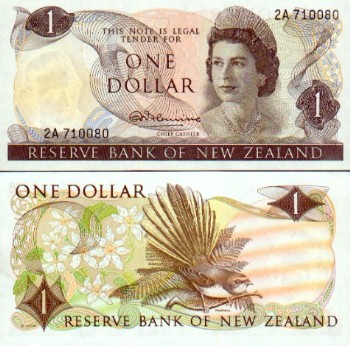
The New Zealand dollar touched its highest level in 26 years to $0.8216 against the U.S. dollar on Monday, helped by improving fundamentals and global U.S. dollar weakness.
 |
| New Zealand Dollar |
The kiwi dollar has been lifted in the past week by talk of solid demand for New Zealand assets such as government bonds, from Asian investors, notably Asian central banks, and also strong commodity prices. Recent New Zealand data has pointed to some pick up in activity, with business confidence bouncing back after the impact of the February earthquake and improved retail sales.
However, inflation expectations have also risen, according to a survey for the central bank, which has led some analysts to suggest the Reserve Bank of New Zealand to consider a rate hike before the end of the year.
Chinese Yuan
"It's certain that the central bank wants to start a new leg of appreciation," said a dealer at a Chinese bank in Shanghai.
 |
| Chinese Yuan |
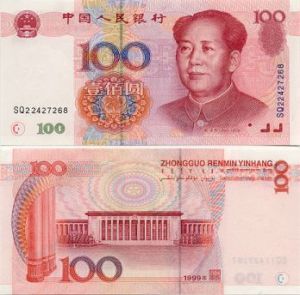
Dealers expected the central bank could let the yuan rise to around 6.45 in this round of appreciation as a stronger currency offsets imported inflation.
Before trade began, the PBOC set the yuan's daily mid-point at a record high of 6.4856 against the dollar, from Friday's 6.4898. The central bank uses the mid-point to guide the currency.
Spot yuan hit a fresh peak of 6.4839 versus the dollar by midday compared with Friday's close of 6.4917. The Chinese currency has now appreciated 5.28 percent since it was depegged from the dollar in June 2010, and 1.61 percent since the start of this year.
Policymakers in Beijing have made it increasingly clear that they are willing to use the currency as one way of fighting inflation, which eased a touch to 5.3 percent in the year to April from a 32-month high of 5.4 percent in March.
Dealers said international pressures is another factor behind the yuan's rise. The U.S. Treasury Department said on Friday that China was not manipulating its currency to gain an unfair trade advantage, but Beijing still needs to allow the yuan to rise much faster in value.
"The two side likely reached a consensus for a further yuan rise, so the yuan has potential to rise more," said a dealer at a Chinese commercial bank in Shanghai.
Offshore, one-year non-deliverable forwards (NDFs) were bid at 6.3650, little changed from 6.3655 at Friday's close. Their implied yuan appreciation in a year's time was 1.89 percent.
In broader markets, the U.S. dollar was weaker against the euro after European officials said Greece should be able to shoulder its heavy debt burden without restructuring.
( Source: Reuters )
From last couple of weeks, there is a buzz around in India about the online consumer platform SPEAK ASIA. Speak Asia is basically a firm, where consumer can subscribe by paying fees, take surveys for different products available in Indian consumer markets and make money out of it. That means Consumer can directly earn money of their opinions. As per the information on the company website, they are claiming that big companies are funding them to take surveys to know consumer sentiments and taste. Company provide a platform where consumer and companies are directly connected. Companies don't need to provide extra time and work force of executives to take those surveys. ( Above information is found at company website )
If we see the structure of the company, it is taking one time 11000 Rs fees for subscription from consumers and rewarding them $20 per successful survey fill up. Every week there are two surveys to be opened so monthly it will be 8 surveys, which will be converted into 160 $ per month. Also, if you pass the channel and make more members under you, you will get $ 30 per member once. Lot of well educated people, from doctors, engineers , teachers and other professional have joined the network through their internal channels.
If we see headlines in news papers, they are saying that there was a temporary stoppage of payments to the consumers due to some reasons in the company SPEAK ASIA. Company has also sent an email to their consumers regarding the situation and declared that payments will be released after 6-8 weeks.
Due to the above situation, our team members were discussing the topic in detail. Below are some key arguments left unanswered.
First glance, if we see the concept looks nice, but our team were discussing few loopholes in the concepts, like although people are getting money, how long the business is viable. As per the people who joined SPEAK ASIA, they were told to earn money online that is almost $160 means 7200 Rs ( 1 USD = 45 INR ). So one can get his investment back in maximum two months if he fills all correct surveys.
Our team members were arguing that if out of 100 people, 5 people want to make their money more than tripled in year, it might be possible that company can afford to pay them that much amount. If more than 90 people want to make their money like this, how can a company afford it. In a year overall SPEAK ASIA has to find 96 surveys from different or same companies ( 2 surveys per week ). Certain big companies can afford such a consumer surveys but only in small group of people to pay such a big amount to the consumers. When it comes to money making, everybody want to join such a concept. Will company afford to pay such a high amount of money to thousands and thousands of people? We don't know anything , we will see.
Companies those are interested in consumer surveys, for such a big payout in such huge number of consumers might be few. At least in India, where consumers products run through volumes of products not a huge profit margins like US, Europe and other western countries. Will these companies afford such a high survey costs for long period of time and continue giving money to SPEAK ASIA for providing such surveys?
Finally, Our members have concluded that it might be possible that company continue working but not forever. Also, company might have different plans to provide good returns to their customers. From a customer point of view, he has a little impatient because there are lot of frauds and fake schemes of money making are being exposed everyday. What will happen this time, we will see.
Copyright Stockinvestips
"The Hangover Part II" hauled in $86.5 million in its first weekend, putting Hollywood on course to set a new revenue record for the long Memorial Day weekend, according to studio estimates Sunday.
From Friday to Sunday, Hollywood's domestic take totaled about $220 million. Once Monday's receipts are counted, the industry should finish the four-day weekend with around $270 million, easily topping the $254.6 million Memorial Day record set in 2007, said Paul Dergarabedian, box-office analyst for Hollywood.com.
"The Hangover" sequel did nearly twice the business of the original blockbuster comedy in its $45 million opening weekend two years ago.
In its first four days since opening Thursday, the Warner Bros. sequel has taken in $118.1 million and is on track to finish the long Memorial Day weekend with about $140 million in the bank.
The first "Hangover" did not hit the $100 million mark until its second weekend. The movie went on to gross $277 million domestically.
"The Hangover Part II" reunites stars Bradley Cooper, Ed Helms and Zach Galifianakis as they awake in another haze and attempt to piece together the mayhem of their drunken night in Bangkok.
Overseas, the sequel opened in 40 other countries and added $59 million.
DreamWorks Animation's "Kung Fu Panda 2" opened solidly with a $48 million weekend, though it came in well below the $60.2 million debut of the first installment three years ago.
Since opening Thursday, "Kung Fu Panda 2" has pulled in $53.8 million. Distributor Paramount estimates the sequel will reach $68.2 million when the holiday weekend closes.
With voice stars Jack Black and Angelina Jolie returning, "Kung Fu Panda 2" follows the menagerie of martial-arts heroes as they face a villain aiming to conquer ancient China with gunpowder and cannons.
"Kung Fu Panda 2" also took in $57 million in 11 overseas markets, including $18.5 million in China.
After a No. 1 debut the previous weekend, Johnny Depp's "Pirates of the Caribbean: On Stranger Tides" slipped to third-place with $39.3 million. Distributor Disney estimates the sequel's domestic revenues will reach $163.6 million by the end of the holiday weekend.
"On Stranger Tides" also has taken in nearly half a billion dollars overseas, with its worldwide total through Monday estimated at $646.5 million.
Director Terrence Malick's sweeping drama "The Tree of Life" drew huge crowds in limited release, debuting with $352,320 in just four theaters in New York City and Los Angeles.
That gave the film a whopping average of $88,080 a theater, compared to a $23,923 average in 3,615 cinemas for "The Hangover Part II."
"The Tree of Life" stars Brad Pitt, Sean Penn and Jessica Chastain in the story of a grown son reflecting on his boyhood with his two brothers, saintly mother and loving but domineering father. The film, which won the top honor at the Cannes Film Festival the previous weekend, expands to more theaters Friday.
Copyright 2011 The Associated Press. All rights reserved. This material may not be published, broadcast, rewritten or redistributed.
European leaders are negotiating a deal to aid Greek Economy, including including international involvement in tax collection and privatization of state assets, in exchange for new bail-out loans for Athens. Also. it will include incentives for private holders of Greek debt voluntarily to extend Athens’ repayment schedule, as well as another round of austerity measures.
 |
| Greece Flag |
Officials hope that as much as half of the €60 billion-€70 billion ($86 billion-$100 billion) in new financing needed by Athens until the end of 2013 could be accounted for without new loans. Under a plan advocated by some, much of that would be covered by the sale of state assets and the change in repayment terms for private debtholders.
Eurozone countries and the International Monetary Fund would then need to lend an additional €30 billion-€35 billion on top of the €110 billion already promised as part of the bail-out program agreed last year.
Officials warned, however, that almost every element of the new package faced significant opposition from at least one of the governments and institutions involved in the current negotiations and a deal could still unravel.
In the latest setback, the Greek government failed on Friday to win cross-party agreement on the new austerity measures, which European Union lenders have insisted is a prerequisite to another bail-out.
In addition, the European Central Bank remains opposed to any restructuring of Greek debt that could be considered a “credit event” – a change in terms that could technically be ruled a default.
One senior European official involved in the talks, however, said ECB objections could be overcome if the rescheduling was structured properly.
Despite the hurdles, pressure is building to have a deal done within three weeks because of an IMF threat to withhold its portion of June’s €12 billion bail-out payment unless Athens can show it can meet all its financing requirements for the next 12 months.
Officials think Greece will be unable to return to the financial markets to raise money on its own in March — as originally planned in the current €110 billion package — meaning that the IMF is now forbidden from distributing any additional cash. Without the IMF funds, eurozone governments would either be forced to fill the gap or Athens could default.
To bring the IMF back in, the new deal must be reached by a scheduled meeting of EU finance ministers on June 20.
( Source: Financial Times )
( Source: Financial Times )
TRADERS
OSWAL CHEM. & FERT. LTD.(BINDALAGRO)
Long Term Bullish
You are still not late to grab this stock…!
Yes…This can move intraday 7-14% up…(take permit from your broker for trade on it )
Buy This Stock in opening 93-94 and LOCKED
Short Term + Intraday 99-101 and 106-111 after closing above 98…Hold your all long for targets 114-129.
Last Week new updated STEM degree list was published and new degrees were eligible for 17 months of OPT extension below is the list of newly added degrees. Check out your degree is eligible for stem extension.
Biological and Physical Sciences
Systems Science and Theory
Mathematics and Computer Science
Biopsychology
Natural Sciences
Nutrition Sciences
Cognitive Science
Marine Sciences
Cognitive Psychology and Psycholinguistics
Comparative Psychology
Developmental and Child Psychology
Experimental Psychology
Personality Psychology
Physiological Psychology/Psychobiology
Social Psychology
Psychometrics and Quantitative Psychology
Psychopharmacology
Forensic Science and Technology
Geographic Information Science and Cartography
Medical Scientist
Pharmaceutics and Drug Design
Medicinal and Pharmaceutical Chemistry
Natural Products Chemistry and Pharmacognosy
Medical Informatics
Management Science
Business Statistics
Neuroscience
Educational Statistics and Research Methods
Animal Sciences, General
Agricultural Animal Breeding
Animal Health
Animal Nutrition
Dairy Science
Livestock Management
Poultry Science
Food Science
Food Technology and Processing
Plant Sciences, General
Agronomy and Crop Science
Horticultural Science
Agricultural and Horticultural Plant Breeding
Plant Protection and Integrated Pest Management
Range Science and Management
Soil Science and Agronomy, General
Soil Chemistry and Physics
Soil Microbiology
Environmental Science
Forest Sciences and Biology
Wood Science and Wood Products/Pulp and Paper Technology
Digital Communication and Media/Multimedia
Animation, Interactive Technology, Video Graphics and Special Effects
For complete list degrees included in STEM Opt extension Here
Biological and Physical Sciences
Systems Science and Theory
Mathematics and Computer Science
Biopsychology
Natural Sciences
Nutrition Sciences
Cognitive Science
Marine Sciences
Cognitive Psychology and Psycholinguistics
Comparative Psychology
Developmental and Child Psychology
Experimental Psychology
Personality Psychology
Physiological Psychology/Psychobiology
Social Psychology
Psychometrics and Quantitative Psychology
Psychopharmacology
Forensic Science and Technology
Geographic Information Science and Cartography
Medical Scientist
Pharmaceutics and Drug Design
Medicinal and Pharmaceutical Chemistry
Natural Products Chemistry and Pharmacognosy
Medical Informatics
Management Science
Business Statistics
Neuroscience
Educational Statistics and Research Methods
Animal Sciences, General
Agricultural Animal Breeding
Animal Health
Animal Nutrition
Dairy Science
Livestock Management
Poultry Science
Food Science
Food Technology and Processing
Plant Sciences, General
Agronomy and Crop Science
Horticultural Science
Agricultural and Horticultural Plant Breeding
Plant Protection and Integrated Pest Management
Range Science and Management
Soil Science and Agronomy, General
Soil Chemistry and Physics
Soil Microbiology
Environmental Science
Forest Sciences and Biology
Wood Science and Wood Products/Pulp and Paper Technology
Digital Communication and Media/Multimedia
Animation, Interactive Technology, Video Graphics and Special Effects
For complete list degrees included in STEM Opt extension Here


